
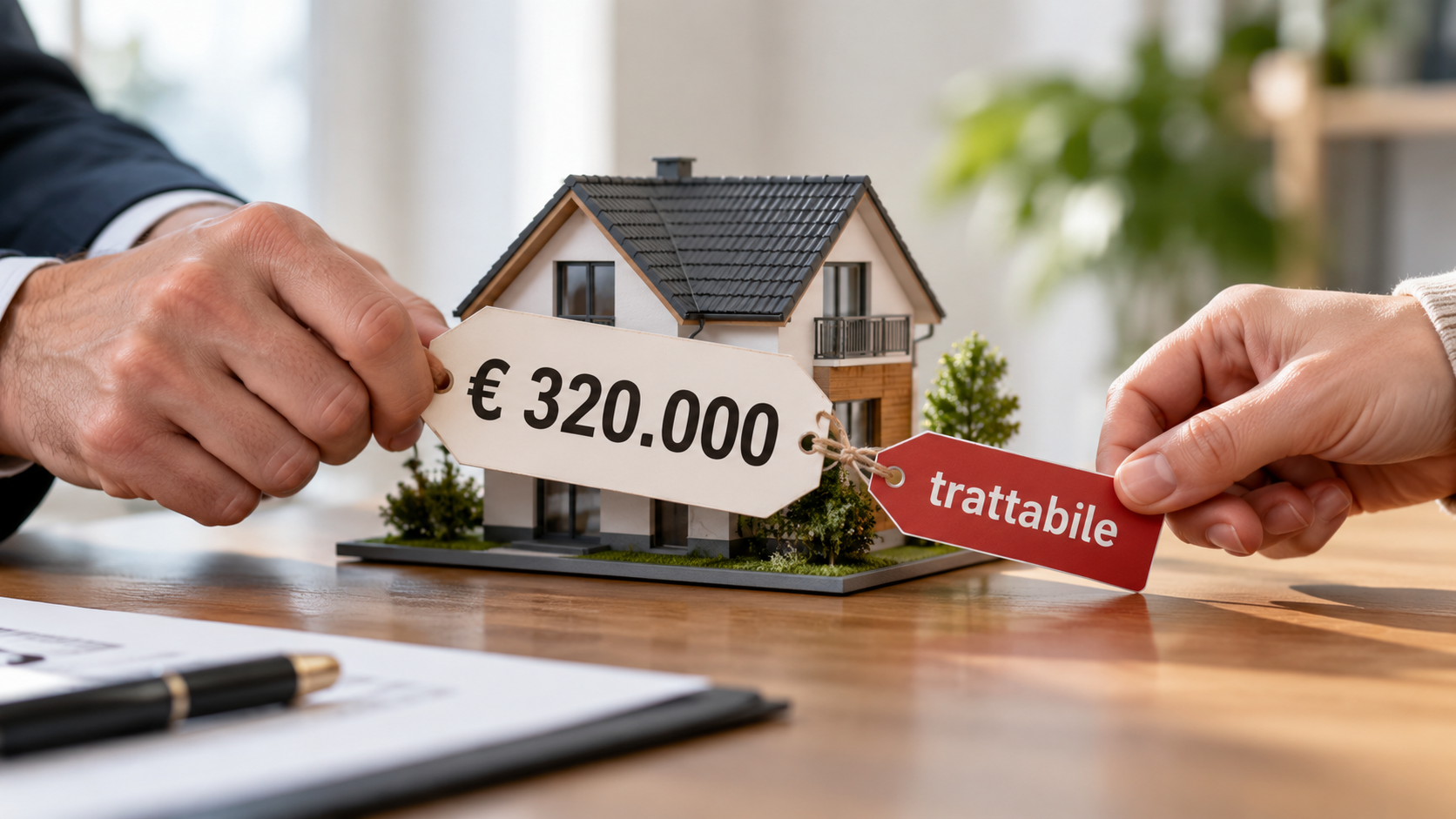
In the world of negotiation, every word counts. Even those that seem harmless, like “price negotiable”. Many sellers put it in their listings or say it during viewings, thinking they are showing themselves to be flexible or accommodating. But in reality, that word can become a boomerang that weakens your position, slows down the sale and makes you miss the opportunity to sell at the best price, turning you into the weaker party in the negotiation.
In this article we look in detail at why writing “negotiable” after the price, or saying it during a viewing, is a very bad idea, what mistakes are hidden behind this choice and what strategy you should adopt instead to get the best possible outcome from the sale.
1. The term negotiable is subjective and abstract. One thing is certain: what “negotiable” means to the seller is always much less than what it means to the buyer.
The word itself contains a pitfall. Negotiable for whom? For the seller, “negotiable” might mean coming down a few thousand euros; for the buyer, however, it can mean a discount of 15–20%. Expectations widen and clash.
When you write “negotiable”, you think you are sending a soft signal, but in reality you are creating fertile ground for misunderstandings. You are indirectly saying: “The price I have written is not the real one.” The result? Buyers will try to push the price down as far as possible, convinced from the start that they have plenty of room. This immediately undermines your ability to negotiate and puts you in a weak position from the outset.
2. It reduces your listing’s visibility on property portals
Many sellers reason like this: “I’ll set a slightly higher price, there will be room to negotiate later anyway”. But this approach does not take into account how property portals work.
Users filter properties by price: if your listing is out of range compared with its real value, it risks not even appearing in the search results. Perhaps you have a home worth €280,000, a figure you would gladly accept, but you list it at €330,000 with the idea of negotiating: a potential buyer looking for properties up to €300,000 will never see you.
So, instead of attracting more interested parties, you end up excluding yourself from the right audience. In practice, you make yourself invisible to those who could actually buy.
3. It signals a lack of strategy and professionalism
It is really very easy to understand that if you write negotiable, your strategy is to load up an untrue price, to give someone the illusion that they can negotiate and that you will meet their price request. It is an old, unconvincing tactic.
From my point of view, I would only advise you to write or say “price negotiable” if your intention is to make the sale and the negotiation more complicated for yourself.
What I do is set a real market price, attract as many buyers as possible, put them in competition with each other and use tools such as the Open House to maximise the result. If I really have to make something clear at that point, it is much more effective to say price non-negotiable.
TO SUM UP
The right strategy: real price + competition
The advice is clear: avoid the word “negotiable” and focus your efforts on a well-defined strategy. Here’s how:
– Analyse the market: identify the real, up-to-date price of your property, based on concrete data, not on personal estimates or hopes.
– Position yourself well online: publish the listing at a real selling price, so as to reach as many buyers as possible.
– Create competition: tools such as the open house (scheduled viewings with several buyers at the same time) increase the sense of urgency and allow you to be the stronger party in the negotiation.
– Make the rules of the game clear: if you really want to signal something during the price negotiation, it is much better to say “non-negotiable” – provided you have done an excellent job on the previous points. It is a strong, clear signal that conveys seriousness, makes it understood that the property is already well priced, and will be your winning weapon to close at your price, not the buyer’s. Try it and see!
Conclusion
In short, writing “price negotiable” seems like a clever move, but in reality it is a trap that complicates the sale. It leads to misunderstandings, reduces online visibility and shows a lack of strategic preparation.
If you want to maximise the result, work on the right price and on a structured sales process. That is how you get the best outcome – not by leaving “margin” on paper.