
For years, when it came to selling a home, the answer seemed obvious: turning to the agency around the corner was considered the most logical, almost automatic choice. The idea was simple and, for a long time, also correct: those who work in the neighbourhood know the market, know what properties are worth, have local contacts and can manage the sale more effectively.
But today reality has changed.
And continuing to reason in terms of ten or fifteen years ago risks leading to ineffective decisions, especially in a market that has changed profoundly, both technologically and in terms of behaviour.
Let me give you a concrete figure, drawn from direct experience in the field.
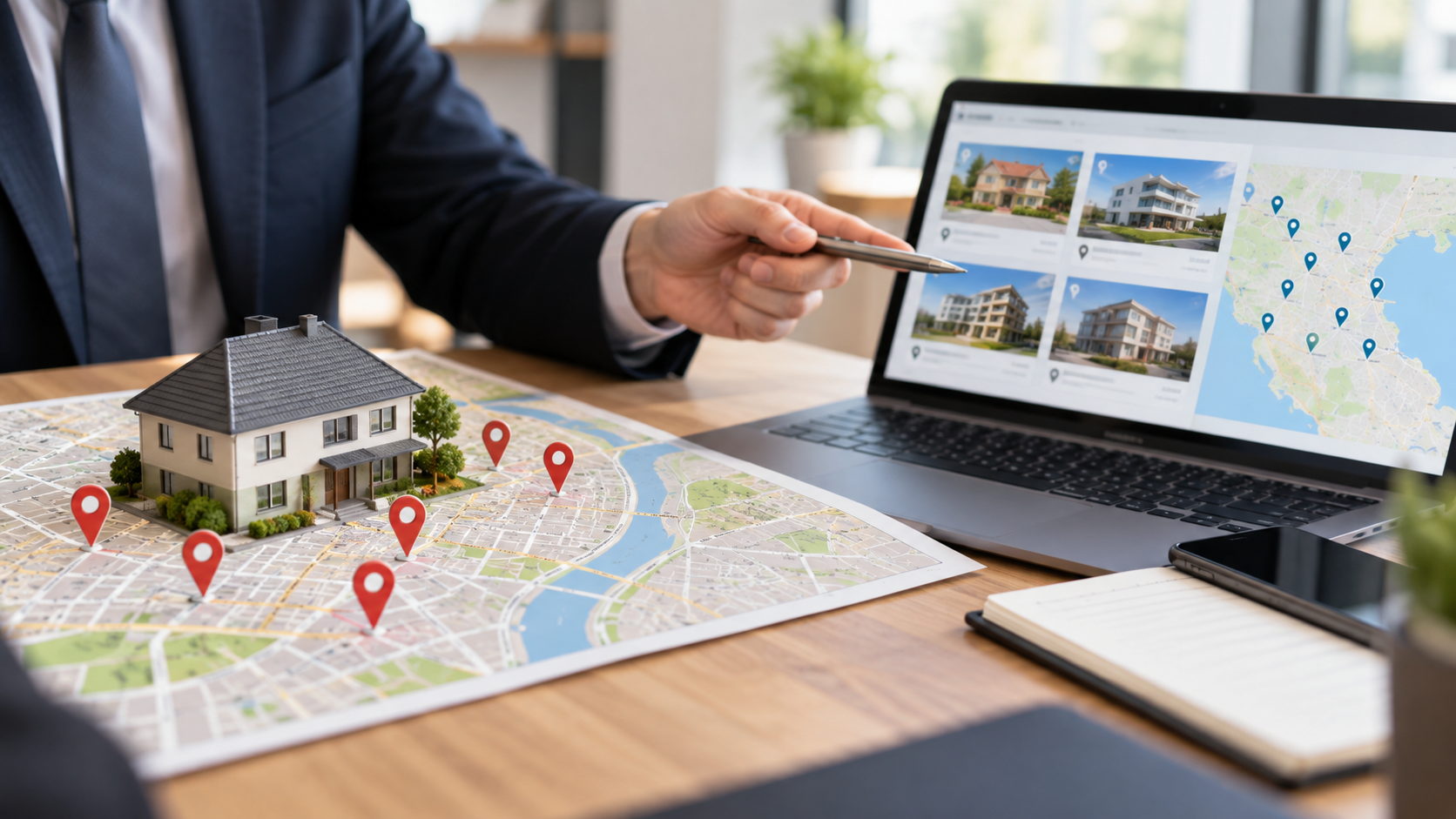
Over 70% of the homes I handle are as far as thirty kilometres from my office, spread across different areas of Rome. And despite the distance, the results are exactly the same: properties sold through Open Houses, often on the first day of viewings and, in several cases, even at a price higher than the one advertised.
All of this, on average, within three months at most.
This is no coincidence.
It is a sign that the concept of the “local agency” needs to be completely rethought today.
In the past, geographical proximity really was an advantage, because it was one of the few levers available for obtaining reliable market information. The neighbourhood agent knew about recent sales, remembered the deals that had been closed, knew their way around local dynamics and, as a result, could provide more accurate valuations than those operating elsewhere.
Today, however, this advantage has been drastically wiped out.
Thanks to technology, it is easy to access real sales data, consult the sales history of a particular building or a specific area and produce far more precise market analyses, based on concrete figures rather than perceptions. It is no longer about “knowing the neighbourhood”, but about being able to read the data correctly and turn it into an effective strategy.
At the same time, buyer behaviour has also changed.
In the past, people looking for a home moved around physically: they made appointments, visited several agencies and spent entire days travelling from one property to another. Contact with the local agency was often the first step in the process.
Today, however, the first viewing happens online.
Buyers start their search from home, filter by area, price and features on property portals, compare dozens of properties in a few minutes and select only those they find genuinely interesting. Only after this step do they decide whether to book a viewing.
This means that online visibility, the quality of the presentation and the strategy with which a property is brought to market carry much more weight than the agency’s location.
It is no longer important to be around the corner from the client.
What matters is being right in front of their eyes when they are searching.
On top of this there is another fundamental element, often overlooked: collaboration.
Working within a structured system such as REMAX makes it possible to involve local agencies as well, overcoming the geographical limit once and for all. When an Open House is organised, it is not a closed event, but an open and shared occasion, in which several professionals can bring their own clients.
In a single day, the property is seen by several qualified buyers, coming through different channels as well, and this creates a completely different dynamic compared with individual viewings spread out over time.
It is no longer an isolated negotiation.
It is a real contest between several interested parties.
And in this context, what determines the result is not who is closest, but who manages to create the best conditions to enhance the property’s value.
In the end, the offer that gets accepted is the most advantageous one.
And that is exactly the goal of a well-managed sale.
Because today the property consultant is no longer simply “the agency around the corner”. It is no longer a choice based on convenience or physical proximity.
It is a choice based on trust.
A choice based on expertise, on the ability to read the market, on the sales strategy and on the credibility the professional is able to convey.
The real question, then, is no longer: “How close is the office?”
It becomes: “Is this the right person to handle my sale?”
And it is precisely in the answer to this question that the final result is decided.